
2026-10-10 ·
How Much Does Water Heater Replacement Cost in Texas? (2026 Guide)
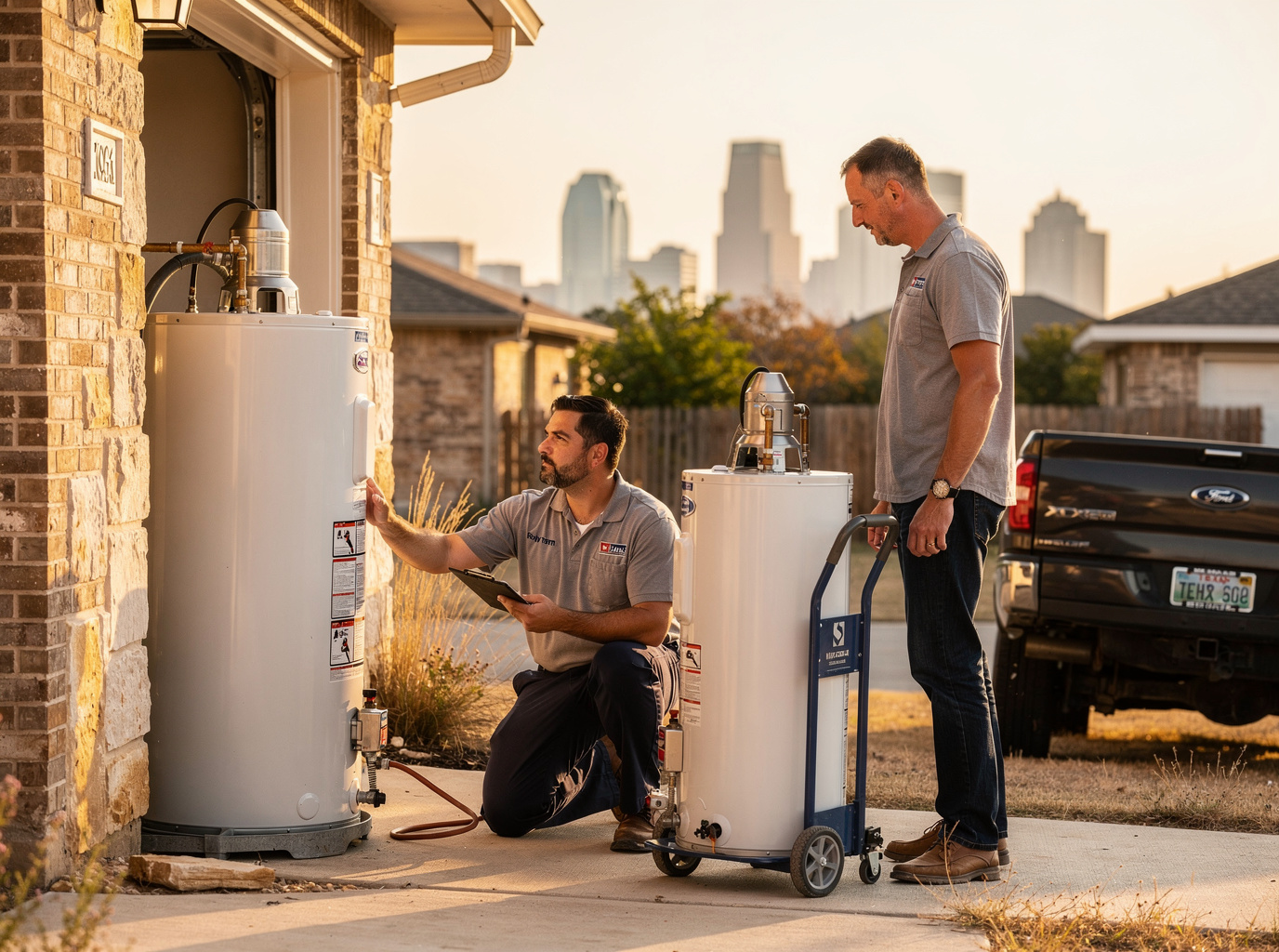
Understanding the Cost of Water Heater Replacement in Austin
For most homeowners across Travis County, a professional water heater replacement typically ranges from $1,200 to $3,500. This price window accounts for the unit itself, the labor involved in removing your old system, and the necessary code-compliant updates required for a safe installation. If you are living in an older home in Hyde Park or Clarksville, your costs may lean toward the higher end of that spectrum. Older housing stock often requires plumbing retrofits to meet modern standards, such as upgrading gas lines or installing proper seismic strapping and pressure relief piping. Conversely, newer builds in areas like Mueller or Westlake often have accessible, modern plumbing configurations that can streamline the installation process, potentially keeping costs closer to the lower or mid-range estimates.
Factors That Influence Your Final Quote
Several variables unique to our Austin climate and infrastructure play a significant role in your final bill. First, the type of fuel source—gas versus electric—is a primary driver. Switching from a standard gas unit to a high-efficiency tankless water heater installation involves more complex venting and gas line sizing, which naturally increases labor costs compared to a simple swap. Additionally, the location of the unit matters. A water heater tucked away in a cramped attic in Barton Hills or a tight utility closet in a South Congress condo is more labor-intensive to access than one located in an open garage in Pflugerville or Cedar Park. We also have to consider our local water quality; if you have hard water, which is common throughout the region, you might opt for a more robust unit with a longer warranty or a built-in scale reduction system to protect your investment.
When to Choose Repair Over Replacement
Before committing to a full replacement, it is worth investigating if your existing unit can be saved. If you are dealing with a minor issue like a faulty thermostat or a heating element that has finally given up, water heater repair is often a cost-effective alternative. For a deeper dive into this decision-making process, check out our guide on Repair or Replace? How to Decide When Your Water Heater Fails. However, if your tank is leaking, if the internal lining is corroded, or if your system is over 12 years old, repair is rarely the fiscally responsible choice. In those instances, investing in a new water heater replacement ensures you aren't throwing good money after bad, especially when considering the energy efficiency gains of modern models.
Comparing Tank vs. Tankless Systems
The choice between a traditional tank and a tankless system is the biggest decision you will make regarding your budget and long-term utility bills. A standard 40-gallon or 50-gallon tank is the most common replacement in Austin, offering a reliable, straightforward solution for most families. However, many residents near Lady Bird Lake or the Texas State Capitol are opting for tankless systems to save space and gain endless hot water. While the upfront cost for a tankless unit is higher, the long-term energy savings in our hot, humid climate can be significant. If you are curious about the trade-offs, our breakdown of Tankless vs Tank Water Heater: Which Is Better for Texas Homes? provides the technical details you need. Remember, our team is available Mon–Fri 8am–6pm and Sat 9am–2pm to inspect your current setup and provide an upfront quote based on your specific home configuration.
Navigating Permits and Code Requirements
In Austin and surrounding areas like Round Rock, municipal codes are strictly enforced to ensure safety, particularly regarding gas connections and water pressure regulation. A professional replacement is not just about unhooking the old unit and connecting the new one; it involves ensuring that the thermal expansion tank is properly sized, the venting is up to current fire safety standards, and the gas supply is sufficient for the BTU output of the new system. These code requirements are non-negotiable for safety. When you work with an owner-operated team, you get workmanship you can inspect and the peace of mind that your new system won't just function, but will also pass any necessary inspections. We prioritize these safety standards in every job, whether we are working in the historic homes of Zilker or the newer developments near Mount Bonnell.