2026-10-10 ·
7 Signs Your Water Heater Needs Replacing (Not Repairing)
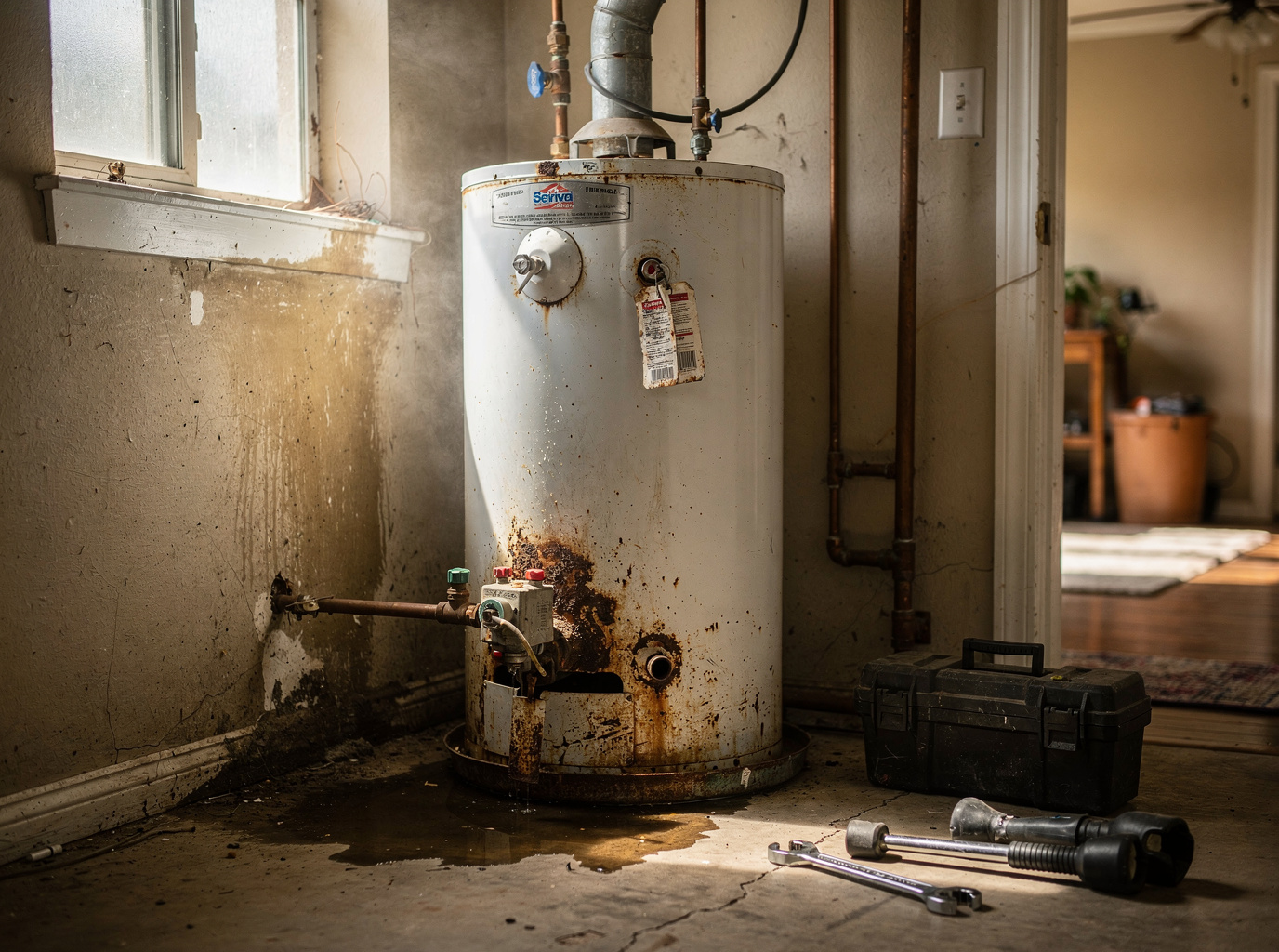
Most standard tank-style water heaters in Travis County have an expected lifespan of 8–12 years. If your unit is approaching or has exceeded this window, you are likely looking at a replacement rather than a repair. While a minor issue like a faulty thermostat might be fixable, major signs of failure often signal that the internal components are degrading beyond the point of cost-effective maintenance. When you start seeing rust-colored water, hearing consistent rumbling, or noticing moisture pooling around the base, it is usually time to consider a Water Heater Replacement rather than sinking more money into an aging appliance. We serve homeowners across the region, from the historic homes near the Texas State Capitol to the newer builds in Mueller, and we have seen exactly how our local water chemistry impacts these systems over time.
1. Persistent Rust or Discolored Water
One of the first signs that your water heater is failing is the presence of rusty or brownish water coming from your hot taps. While this can sometimes indicate a corroded anode rod—the sacrificial part designed to rust so the tank doesn't—it often means the interior lining of the tank has started to corrode. If the tank itself is rusting, the integrity of the metal is compromised. In Austin, where water hardness can vary, sediment buildup accelerates this corrosion process significantly. If you see discolored water, you should check your Water Heater Repair options first, but be prepared for the reality that a tank with an internally rusted lining cannot be patched. Once the rust breach occurs, the tank is effectively on borrowed time and will eventually leak, potentially causing significant water damage to your flooring or foundation.
2. Age of the Unit Exceeds 10 Years
If you are unsure how old your heater is, check the serial number on the manufacturer's sticker. The first few digits usually indicate the manufacturing date. If your unit is older than 10 years, it is statistically likely to experience a catastrophic failure soon. Many residents in established neighborhoods like Hyde Park, Clarksville, or Barton Hills are operating units that were installed during previous renovations decades ago. While it might still be heating water, its efficiency has likely dropped significantly compared to modern models. Maintaining an appliance well past its prime often leads to higher energy bills and the risk of a sudden, messy leak. If you are regularly calling for service on an older unit, it is often more economical to opt for a Gas Water Heater Replacement or an electric upgrade rather than continuing to pay for recurring repairs on obsolete equipment.
3. Water Pooling Around the Base
Finding water on the floor around your water heater is a major red flag. This is often caused by thermal expansion, where the tank expands and contracts during heating cycles, eventually causing the metal to fracture. In some cases, a loose connection or a faulty pressure relief valve might be the culprit, which could be a simple fix. However, if the leak is coming from the bottom of the tank, it is almost certainly a sign of a structural tank failure. Given our hot, humid climate in Central Texas, moisture that isn't addressed quickly can lead to mold growth in confined utility closets. Do not ignore a small puddle; it is often the precursor to a much larger rupture. If you see active leaking, you should treat it as an urgent situation and consider whether Emergency Water Heater Replacement is necessary to protect your home from water damage.
4. Consistent Rumbling or Popping Noises
As water heaters age, sediment—composed of minerals like calcium and magnesium—builds up at the bottom of the tank. In areas like South Congress or Westlake, the water quality can lead to faster sediment accumulation. When this sediment layer gets thick, the burner or heating element has to heat through the sludge to reach the water. This trapped water boils and causes the popping, banging, or rumbling sounds you might hear. This process is not just noisy; it is inefficient and damages the tank lining by creating hot spots that weaken the steel. If you hear these sounds, you can try flushing the tank, but if the noise persists, it indicates that the structural damage to the tank bottom is already done. Replacing the unit is often the only way to restore efficiency and stop the noise before the tank fails completely.
5. Inconsistent Water Temperatures
If your shower goes cold after only a few minutes, or if your water temperature fluctuates wildly, your heater is struggling to keep up with demand. This is common in older homes near Zilker or Downtown that may have smaller, outdated units that no longer meet modern household needs. While Thermostat & Heating Element Replacement can sometimes solve temp issues, if the problem is a failing dip tube or a compromised heating element in an old tank, the cost of repair might not be worth it. Many homeowners in Austin are finding that switching to a more efficient system is the better long-term investment. If you are curious about whether a tankless model might solve your capacity issues, you can read more about Tankless vs Tank Water Heater: Which Is Better for Texas Homes? to see if that fits your lifestyle better.
6. Frequent Repairs Are Becoming Costly
We believe in transparency. If you find yourself calling a plumber for water heater issues more than once every 18 months, you are likely spending more on service calls than the value of the unit. Every repair call involves labor costs and parts, and with an aging unit, one repair often leads to another as the stress of the fix affects other old components. If you are constantly patching up a system, consider the cumulative cost of those repairs versus the upfront price of a new, efficient installation. A new unit comes with a clean slate, better energy efficiency, and peace of mind. If you are on the fence, we are available Mon–Fri 8am–6pm and Sat 9am–2pm to help you evaluate whether your current unit is worth keeping or if it is time to move on.
7. Higher Than Average Energy Bills
If you have noticed a steady, unexplained creep in your utility bills, your water heater might be the silent culprit. As sediment builds up and internal components degrade, the heater has to work much harder and run longer to maintain the same temperature. This is especially true during our mild winters when the incoming water temperature drops, forcing the unit to work overtime. An inefficient, struggling heater is essentially burning money every month. Upgrading to a modern, high-efficiency unit can often pay for itself over time through energy savings. If you are interested in the long-term financial benefits of upgrading, check out our article on Tankless Water Heater Replacement Cost: Is the Switch Worth It? to understand how a newer, more efficient system can impact your monthly expenses in the long run.