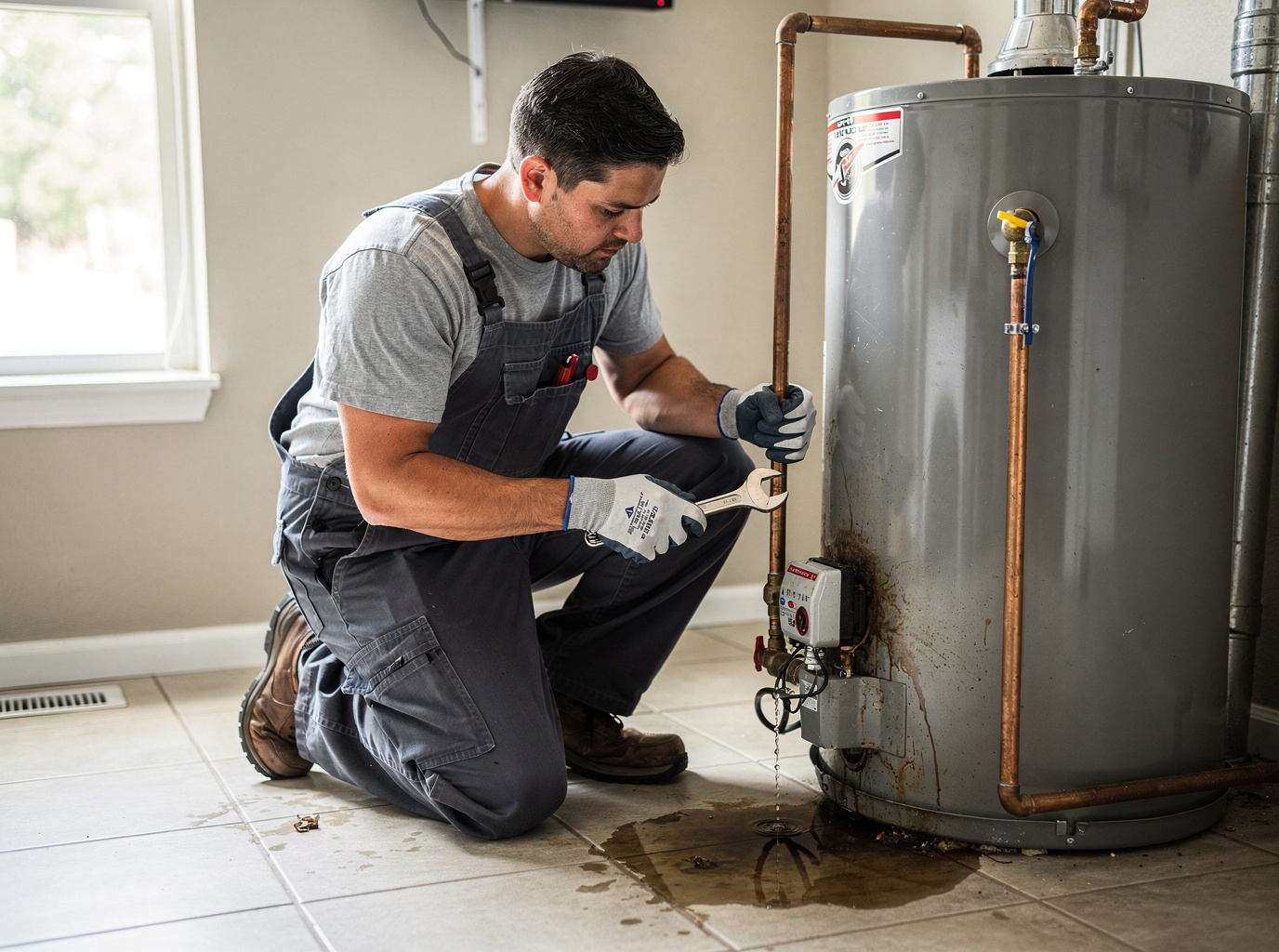
Austin’s water supply, particularly the hard water common throughout Travis County, is notoriously tough on residential water heaters. Over time, calcium and magnesium buildup inside your tank accelerates corrosion, often leading to pinhole leaks that start small but escalate quickly. Whether you are in an older bungalow in Hyde Park or a newer build near Mueller, that sediment accumulation is the silent killer of water heaters. When you notice moisture pooling around the base of your unit, it is rarely a simple condensation issue. Our team understands how the specific mineral content in our local water reacts with different tank materials, allowing us to diagnose whether you are dealing with a simple valve failure or a terminal tank rupture.
Addressing a leak requires more than just tightening a fitting; it demands an understanding of the specific plumbing codes enforced across the Austin area. From the historic homes in Travis Heights to the sprawling properties in Westlake, we ensure every repair complies with local safety standards, especially regarding thermal expansion and pressure relief valve discharge. We frequently encounter units where the T&P (temperature and pressure) valve has failed, causing water to weep down the side of the tank. Ignoring these leaks can lead to significant water damage to your flooring and sub-flooring. We provide honest assessments, clearly distinguishing between a repairable component failure and a tank that has reached the end of its functional life.
Water Heater Leak Repair Near You — Choose Your City
Every city below has its own local Water Heater Leak Repair page with coverage details.
Technician insight
In Austin, the thing that catches most people out with water heater leaks is the sheer impact of our hard water. It builds up sediment at the bottom of the tank so fast that it eats through the glass lining, turning a minor leak into a total tank failure. Don't assume a puddle is just condensation; if you see water near your heater, check the T&P valve discharge pipe first, but call a pro before the floor gets ruined.
Leak Repair in a Barton Hills Bungalow
A homeowner in Barton Hills noticed a slow, persistent drip coming from the base of their water heater. We arrived and discovered that sediment buildup had caused the drain valve to corrode and fail, rather than the tank itself. We drained the unit, replaced the faulty valve with a high-quality brass fitting, and flushed the remaining sediment. The homeowner avoided a premature full-unit replacement and restored their hot water reliability the same day.
Water Heater Leak Repair Services We Offer
✓Temperature and Pressure Valve Replacement
We replace faulty T&P valves that cause water to weep or spray, ensuring your tank remains safe and compliant with local code.
✓Water Heater Tank Drain and Flush
We remove the sediment buildup common in Austin water to prevent future corrosion and restore the efficiency of your unit.
✓Gas Control Valve Repair
We diagnose and repair malfunctioning gas controls to keep your burner operating safely and consistently.
✓Electric Heating Element Replacement
We swap out burnt-out electric elements that can cause leaks at the flange or prevent your unit from heating properly.
✓Water Heater Pipe Fitting Repair
We seal or replace corroded inlet and outlet connections to stop leaks before they damage your home's flooring.
Water Heater Leak Repair Cost in Texas
| Service | Typical Range | What Affects It |
|---|---|---|
| Leak Diagnosis | $95–$150 | Standard service call fee applied to the repair cost |
| T&P Valve Replacement | $150–$250 | Includes parts and labor |
| Heating Element Repair | $200–$350 | Varies by unit accessibility and model type |
| Gas Control Valve Repair | $300–$500 | Requires specialized calibration and specific parts |
Ranges are typical for Texas and confirmed with an exact written quote before any work starts.
How it works
- 1
Initial Inspection and Leak Source Identification
We arrive on-site to pinpoint exactly where the water is originating, distinguishing between condensation and active plumbing leaks.
- 2
Water Supply and Power Shut-off
We safely isolate the unit by shutting off the water supply and gas or electrical power to prevent further damage.
- 3
Component Repair or Replacement
We perform the necessary repair, whether it is a valve replacement or a fitting adjustment, using parts suited for local water conditions.
- 4
System Testing and Pressure Verification
We slowly repressurize the system and monitor for leaks to ensure the repair is holding and the unit is operating correctly.
Pricing
We believe in transparent, upfront pricing. You will always know the cost of the repair before we turn a single wrench, with no surprise fees or hidden charges.